


For most dental practices today, the answer is yes.
Instrument cassette systems dramatically reduce instrument handling, simplify sterilization workflows, and can cut instrument processing labor by as much as 80% compared to traditional tray systems.
But many dentists don’t realize that the real benefit of cassettes isn’t just sterilization, it’s workflow efficiency across the entire practice.
Instrument processing is the most frequently performed workflow in dentistry. Every procedure creates a chain of tasks that moves instruments from the operatory to sterilization and back again. When that system isn’t designed efficiently, the impact adds up quickly.
Teams spend unnecessary time handling instruments, setting up trays, reorganizing tools, and preparing rooms for the next patient. What appear to be small inefficiencies compound throughout the day slowing room turnover, increasing labor demands, and quietly reducing practice productivity.
In this article, we’ll explain:
- Why tray systems originally existed
- How modern sterilization technology changed instrument workflows
- Why many practices are converting to cassette systems
- And why many dental offices that switch to cassettes still fail to realize their full efficiency potential
Understanding these differences can help you design a simpler, faster, and more productive instrument workflow for your entire practice.
Why Did Dental Practices Originally Use Tray Setups?
Tray setups were never designed as the most efficient system for managing dental instruments.
They existed largely because of limitations in early sterilization technology.
Years ago:
- Autoclaves were small
- They were less efficient
- Sterilization cycles often relied on chemical assistance
As a result, bulk Instruments had to be spread loosely across trays to process properly. Because of these limitations, dental instruments could not be grouped or “kitted” together in purpose-specific containers.
Instead, instruments were:
- Laid out loosely on tray surfaces
- Processed in bulk in the autoclave
- Reorganized afterward for procedures generally with color-coded tapes.
This meant significant manual handling at every stage. (Using trays like this is like being employed to do “pick up sticks…. forever!)
And for a long time, it was simply the only practical option.
Why Tray Systems Often Lead to “Tray Overload”
Another challenge with traditional tray setups is how quickly they multiply.
In many practices, trays are organized around very specific procedures as an attempt to reduce individual instrument handling.
But in reality, it often creates the opposite effect.
Instead of reducing labor, the practice ends up with a vast increase in the number of tray types that must be managed and reset. The time saved in sterilization is simply shifted to labor in complex tray setups.
Practices commonly end up with trays for:
- Crown preparation
- Crown insertion
- Hygiene
- Pediatric hygiene
- Extractions
- Composite procedures
- Periodontal procedures
- Denture procedures
- And many more variations
Before long, a practice may have dozens of different trays, often color-coded or labeled for each procedure.
While this may seem organized at first, it often creates unnecessary complexity.
Why? Because each tray must be:
- Maintained separately
- Restocked individually
- Tracked for missing instruments
- Stored somewhere in the practice
Many tray and equipment vendors even recommend storing these trays in every operatory, which only adds to the confusion...Madness!
The result is more inventory, more disorganization, and more opportunity for inefficiency.
What Changed: The Evolution of Modern Autoclaves
As sterilization technology improved, so did the possibilities for workflow.
Modern autoclaves became:
- Larger
- More efficient
- More consistent
- Therefore, capable of processing grouped instruments
This technological shift created a new opportunity:
Instead of processing instruments individually, practices could prepare complete instrument sets for specific procedures. Or, even better, families of procedures.
This is where instrument cassettes entered the picture.
What Are Dental Instrument Cassettes?
An instrument cassette is a metal container designed to hold a specific set of instruments for a particular procedure.
The cassette:
- Holds instruments securely
- Goes through the entire sterilization process together
- Is stored as a ready-to-use procedure set
Instead of handling individual instruments repeatedly, the team simply handles one cassette.
The Biggest Advantage of Cassettes: Labor Reduction
The primary reason many practices convert to cassettes is simple:
They dramatically reduce labor.
In most cases, cassette systems can reduce instrument handling and setup labor by as much as 80% because instruments move through the workflow as a complete set instead of as individual pieces.
Without cassettes, instruments must be:
- Removed individually after treatment
- Transported to sterilization
- Sorted
- Cleaned
- Placed on trays
- Sterilized
- Removed
- Reassembled for the next procedure
With cassettes, the workflow becomes:
- Place debrided instruments in the cassette after use
- Run the cassette through the entire sterilization
- Store the cassette until needed again
Fewer steps. Less handling. Less labor.
How Cassettes Simplify Instrument Organization
Cassette systems take a different approach when correctly designed.
Instead of building a unique tray for every variation of a procedure, instruments are grouped into broader clinical categories with a smaller number of specialty cassettes.
For example, a practice might organize cassettes around:
- Restorative procedures
- Endodontic procedures
- Surgical procedures
- Hygiene procedures
Each cassette contains a broad range of instruments needed for that type of clinical work. This dramatically reduces the number of instrument setups a practice must manage. Instead of maintaining dozens of highly specific trays, the team works with a smaller number of standardized cassette sets.
That means:
- Less inventory to manage
- Fewer instruments getting lost between setups
- Faster instrument processing
- Simpler sterilization workflows
In other words, cassettes don’t just improve sterilization efficiency; they simplify the entire instrument management system in a dental practice.
Why Many Practices Still Miss the Efficiency of Cassettes
Simply switching from trays to cassettes does not automatically make a practice more efficient.
One of the most common mistakes we see is that practices recreate the tray system inside the cassette.
Instead of simplifying the instrument system, they build a cassette for every specific procedure:
Before long, the practice ends up managing dozens of cassette types, which creates the same complexity the tray system created in the first place.
The real efficiency comes from thinking about instruments differently.
Instead of organizing instruments around every individual procedure, high-efficiency practices organize them around families of procedures.
With this approach, the number of instrument setups drops dramatically. The team spends less time searching for the right setup, fewer instruments are handled, and sterilization becomes much simpler.
In other words, the goal of cassettes is not just to change the container. The goal is to simplify the entire instrument system.
What Is the Cost Difference Between Trays and Cassettes?
Some practices hesitate to switch to cassettes because of the initial purchase cost.
However, when you evaluate the total cost of ownership, cassette systems become the more economical solution.
Why?
First, because labor is the highest operating cost in a dental practice!
If a cassette system reduces sterilization labor by up to 80%, the long-term savings in staff time typically outweigh the upfront investment.
And second, more rapid centralized resupply.
In other words,
The real cost of trays is hidden in labor.
When Does It Make Sense to Convert to Cassettes?
Switching to cassettes makes the most sense when a practice wants to:
- Improve sterilization workflow
- Reduce staff workload
- Speed up operatory turnover
- Standardize instrument setups
- Scale to more operatories efficiently
For practices focused on clinical efficiency and team productivity, cassette systems are often a natural next step.
Our sister company, Ergonomic Products, offers a wide range of cassette solutions designed specifically for modern dental practices.
| Medium Surgical | 9 Instrument | Thompson 5 | Restorative |
|---|---|---|---|
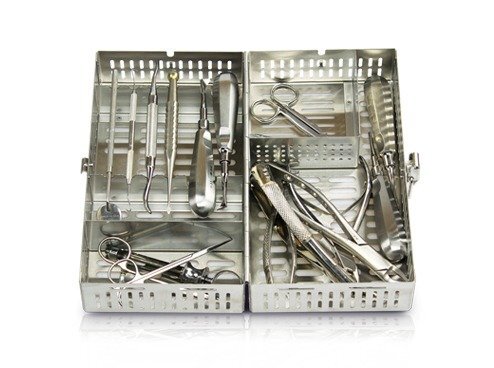
Ideal for large, bulky surgical instruments
|
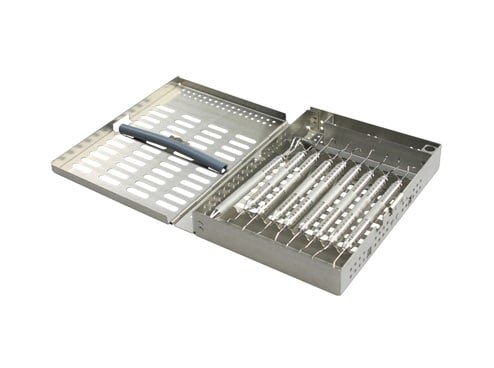
This cassette is the only unit you need for any hygiene procedure
|
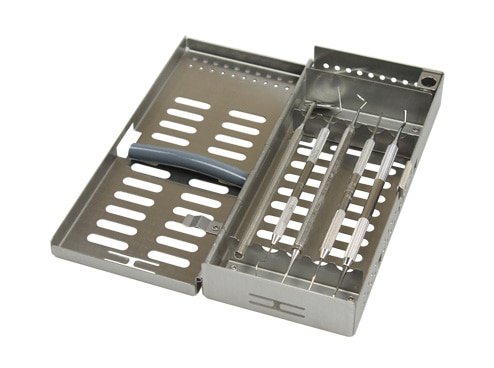
This setup covers preliminary exam and diagnostic instruments
|
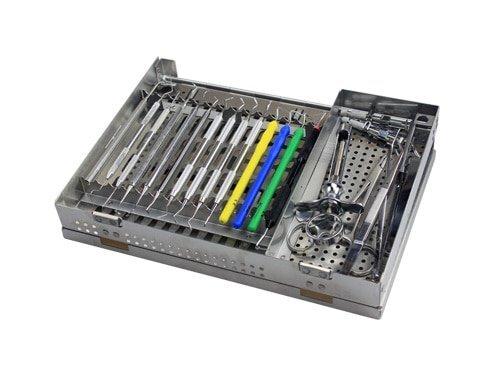
This unit is your bread and butter cassette and is used for all restorative dentistry
|
Choosing the right system can help your team reduce setup time, simplify instrument management, and support a more efficient clinical day.
Is Your Sterilization Workflow Designed for Efficiency?
The tray vs. cassette decision is really part of a larger conversation:
How efficiently does your practice move instruments from chairside to sterilization and back again?
Instrument processing is the most repeated workflows in dentistry. Even small inefficiencies multiply quickly throughout the day.
Designing the sterilization center, workflow paths, and instrument systems correctly can dramatically impact:
- Team productivity
- Staff satisfaction
- Clinical throughput
- Practice profitability
But identifying these opportunities isn’t always easy from inside the practice.
That’s why many dentists choose to start with a Clinical Efficiency Assessment from Design Ergonomics.
During this assessment, our clinical training specialists evaluate how your team currently works, from instrument processing and sterilization flow to operatory setup and treatment room turnover. The goal is to identify where time, motion, and unnecessary steps can be eliminated so your systems support a smoother, more productive clinical day.
At Design Ergonomics, we’ve studied the workflows that drive dental practice productivity for decades. One of the most important systems we evaluate is how instruments move from the operatory to sterilization and back again. Through years of designing high-performance dental practices, we’ve consistently seen the shift from traditional tray setups to instrument cassette systems—simply because cassette systems create a more efficient, streamlined clinical workflow.
For many practices, this process reveals simple workflow improvements that can significantly increase efficiency and reduce daily stress for the entire team.
Learn more about the Design Ergonomics Clinical Efficiency Assessment and how it can help your practice optimize sterilization and clinical workflows.
And explore dental instrument cassettes from Ergonomic Products and simplify your instrument workflow today: https://www.ergonomic-products.com/cassettes/
