
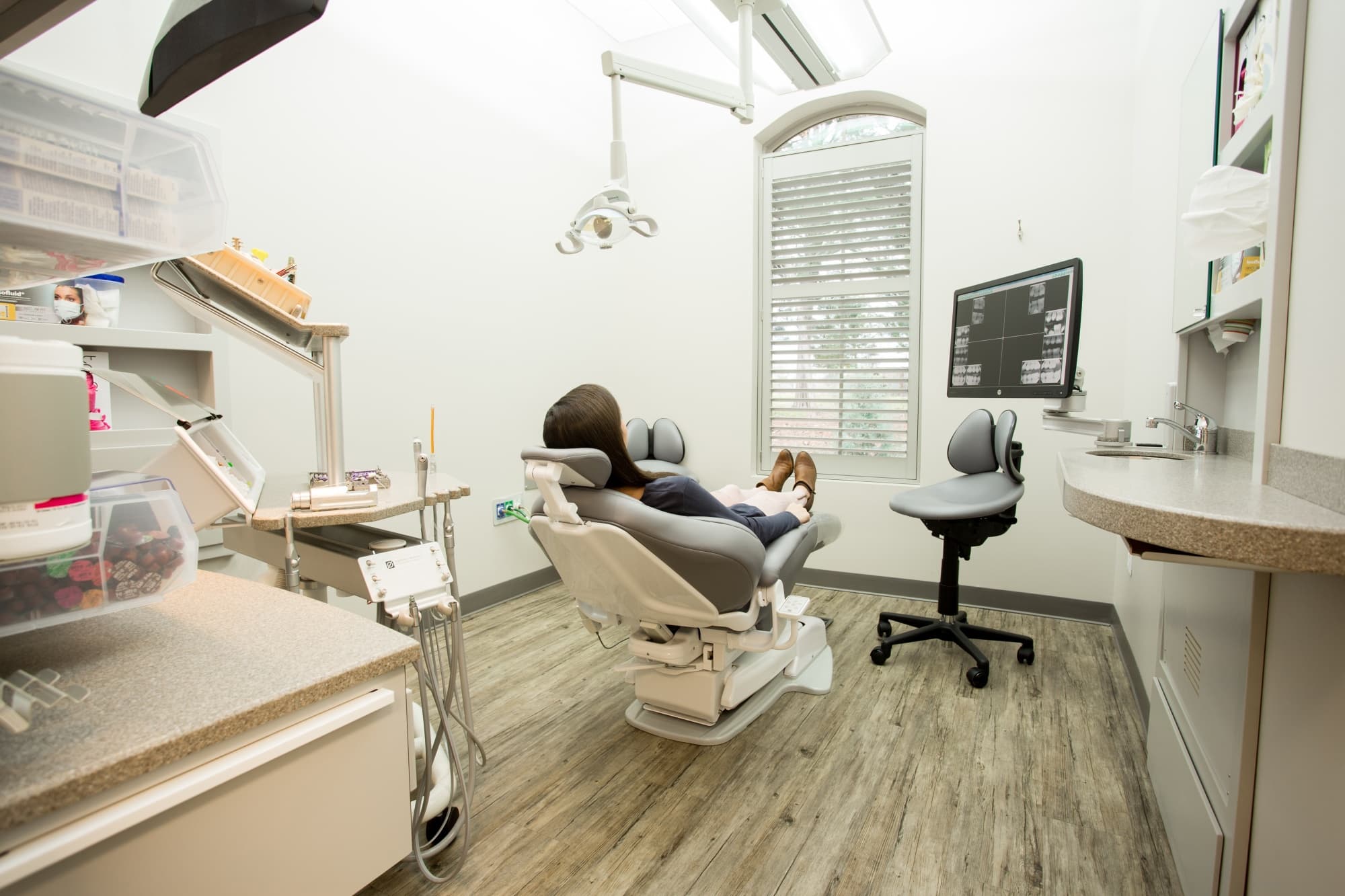
If your practice feels busy, but not truly productive, you’re not alone.
Many dental teams are working harder than ever:
Moving faster between patients. Turning rooms over quicker. Trying to stay on schedule while managing constant interruptions.
And yet, the day still feels rushed.
Systems feel complex.Efficiency feels just out of reach.
This isn't a reflection of your team’s effort.
It’s a reflection of the system they’re working within.
Most practices are told to improve efficiency by doing things faster.
But real, sustainable efficiency doesn’t come from speed. It comes from a fundamentally different approach:
Eliminate what doesn’t need to exist before you try to optimize what does.
This shift changes everything.
In this article, we’ll explore how inefficiency is often built into systems themselves, and how eliminating unnecessary processes can transform productivity, reduce stress, and improve patient care.
What we'll cover:
- The Danger of Optimizing Waste
- What is over-processing—and why does it create more work?
- Elimination Is the Highest Form of Efficiency
- Why can’t inefficiency be scaled?
- Elimination Is a Proven Principle—Not a New Idea
- Efficiency Is a Design Problem, Not a People Problem
The Danger of Optimizing Waste
When something feels inefficient, most teams immediately try to improve it.
They reorganize. They streamline. They build systems around it.
But rarely do they stop to ask:
Should this process exist at all?
This is how waste becomes embedded in daily operations. Over time, teams become highly efficient at performing tasks that add no real value.
In clinical environments, this often looks like:
- Assistants leaving the operatory multiple times during procedures
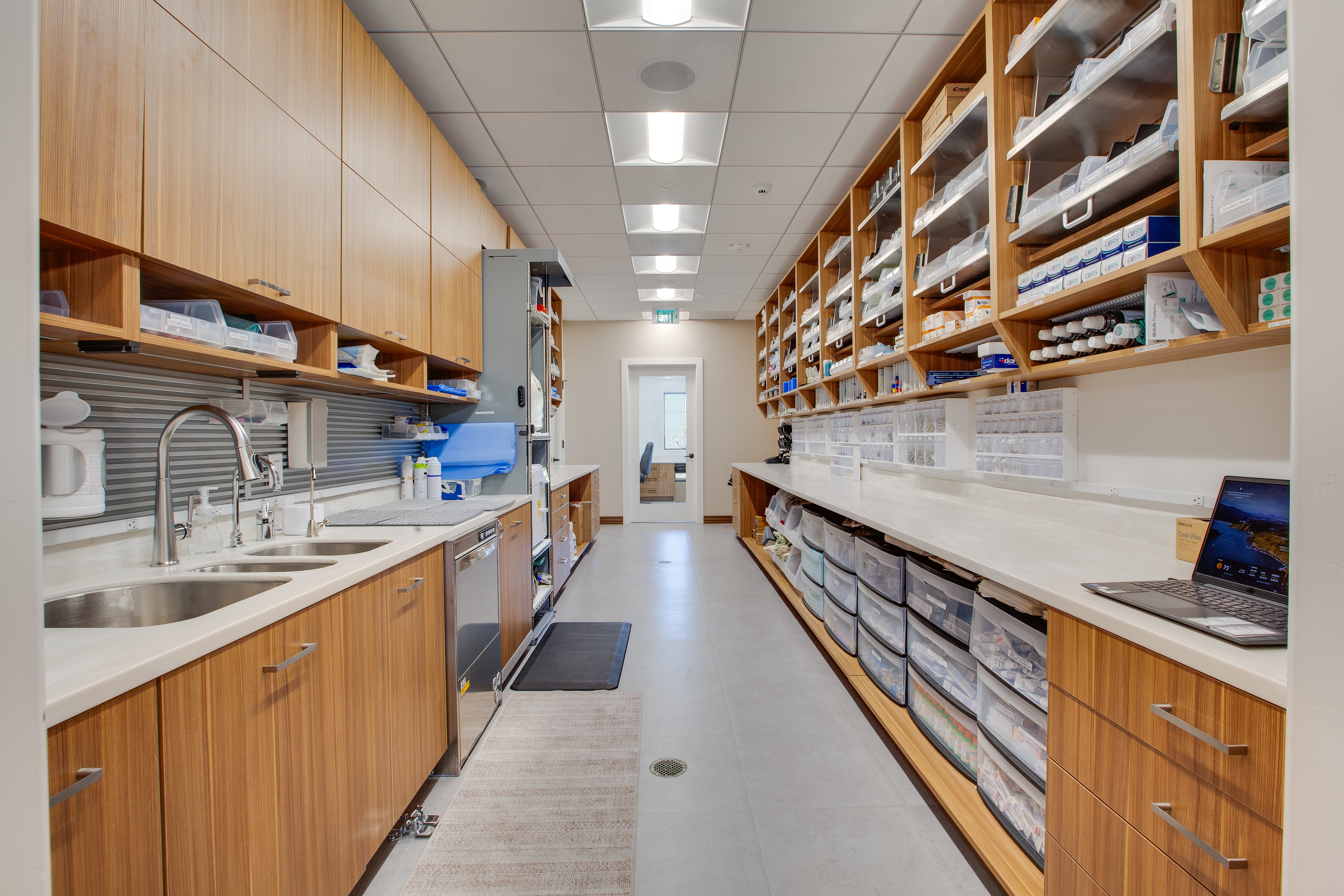
- Supplies stored in multiple locations “just in case”
- Redundant systems compensating for poor layout
- Workflows designed to manage complexity instead of eliminate it
These aren’t people problems.
They are system design problems.
If your team is constantly compensating for the space, not supported by it, there’s a better way.
Explore how Design Ergonomics redesigns clinical environments to eliminate unnecessary movement and inefficiency.
What is Over-processing? Why Does It Create More Work?
One of the most deceptive forms of inefficiency is over-processing: doing more work than necessary to deliver value.
A common example is pre-assembling patient “to-go” bags.
.png?width=473&height=315&name=Untitled%20design%20(24).png) At first glance, this feels efficient. But in reality, it creates:
At first glance, this feels efficient. But in reality, it creates:
- Inventory that must be stored and managed
- Supplies that may expire or go unused
- Time invested in preparing items that may never be used
This introduces a second form of waste: inventory waste.
Now the practice is managing products that were created in anticipation of demand, not in response to it.
But perhaps the most important question is this: Does the patient even value these items?
Many patients already use products they prefer: electric toothbrushes, specific floss types, or fluoride-free alternatives.
When unnecessary processes are eliminated, time is returned to what matters most: patient care.
Not sure what processes in your practice are adding value and which are creating hidden waste? Schedule an Efficiency Assessment to uncover opportunities for immediate improvement.
Elimination Is the Highest Form of Efficiency
There is a hierarchy to improvement:
- Making a task faster → incremental improvement
- Simplifying a task → significant improvement
- Eliminating a task → permanent improvement
The greatest gains are not found in optimizing motion; they are found in eliminating unnecessary motion entirely.
Why Can’t Inefficiency be Scaled?
Growth doesn’t fix inefficiency; it amplifies it.
Practices that attempt to scale without addressing system design often experience:
- Increased stress
- More bottlenecks
- Greater inconsistency
Because inefficiency compounds over time.
You cannot scale inefficiency. You can only eliminate it.
Organizations that scale successfully do so by removing complexity, not managing it.
Elimination Is a Proven Principle, Not a New Idea
This principle is echoed in some of the most influential business frameworks of our time.
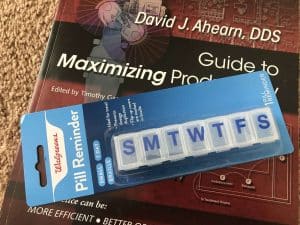
In The 4-Hour Workweek, Tim Ferriss emphasizes that productivity is not about managing time; it’s about eliminating what doesn’t matter. His work challenges leaders to question assumptions and remove unnecessary complexity.
.jpg?width=649&height=365&name=Untitled%20design%20(4).jpg)
Similarly, Scaling Up by Verne Harnish explains that scalable organizations don’t succeed by managing complexity; they succeed by removing it. Growth is enabled when systems become simpler, clearer, and more intentional.
Both reinforce the same fundamental truth:
You cannot scale inefficiency. You can only eliminate it.
Efficiency is a Design Problem, not a People Problem
Most inefficiencies in dental practices are not caused by a lack of effort.
They are caused by environments that were never designed to support optimal flow.
When clinical spaces are intentionally designed:
- Supplies are exactly where they are needed
- Movement is minimized
- Cognitive load is reduced
- Teams operate with consistency and predictability
Efficiency stops being something the team must force and becomes something the system provides.
See how your current layout is impacting efficiency. Request a free floor plan review, and our team will walk through your space with you to identify areas that:
- Create production bottlenecks
- Limit efficiency and waste valuable space
- Negatively impact the patient experience
Want to see what an optimized practice actually looks like?
Reserve your spot at an upcoming Over-the-Shoulder event!
Reading about efficiency is one thing. Seeing it in action is something entirely different.
At our Over-the-Shoulder event, you’ll gain real-world insight into:
- How top practices reduce wasted motion and increase productivity
- What efficient clinical setups actually look like in use
- How design, equipment, and workflow come together to support performance
If you’re serious about eliminating inefficiency, not just managing it, this is where it becomes real.
Ready to uncover what’s holding you back? Schedule a meeting with a Design Ergonomics Practice Advisor.
We’ll walk through your current layout, workflows, and goals to:
- Identify hidden inefficiencies
- Highlight opportunities to improve flow and productivity
- Outline clear, practical next steps
Topics: