Are Those $1 Distilled Water Jugs Actually Costing Your Practice Thousands?
Most dental practices never question how they handle distilled water.
A team member picks up a few jugs at the store. They get stored in a closet. Someone refills the autoclave when needed. It seems simple, inexpensive, and harmless.
But when you step back and look at the system behind those jugs, the real question becomes:
How much is that process actually costing your practice every year?
Between staff time, storage space, supply runs, lifting heavy containers, and the operational friction of constantly managing inventory, distilled water can quietly become one of the most inefficient systems inside a dental office.
At Design Ergonomics, we analyze hundreds of operational decisions that impact dental practice efficiency, from workflow and equipment placement to the hidden costs that most teams overlook. One of the most common patterns we see is that small, repeated inefficiencies often add up to thousands of dollars over time.
In this article, we’ll answer the questions many dentists are starting to ask:
Let’s start with the simplest question.
What Does Distilled Water Cost a Dental Practice?
A typical dental practice uses about 16 gallons of distilled water per month for an autoclave. While the water itself may cost roughly $200 per year, the true cost including staff time, fuel, storage space, and handling, can approach $400 annually.
Over five years, that adds up to about $2,000, which is roughly the cost of installing a commercial-grade onsite distillation system.
How Many Jugs of Distilled Water Does a Dental Practice Use Each Month?
If you’re following manufacturer guidelines, it takes approximately 4 gallons of distilled water per week to maintain a standard autoclave like the Midmark M11. That’s 16 gallons per month.
At roughly $1 per gallon, that’s:
- $16/month
- ~$192/year in materials alone
That seems harmless but that’s only the visible cost.
What Is the Real Cost of Buying Distilled Water?
This is where most practices underestimate their numbers.
Here’s what doesn’t show up on the receipt:
1. Staff Time
Someone has to:
-
Drive to purchase the water
-
Load and unload the jugs
-
Store and rotate inventory
-
Manage shortages when supplies run out
If a team member spends just one hour per month managing distilled water logistics, what is that hour worth in production?
2. Fuel & Mileage
Small, but recurring.
3. Physical Strain
Repeatedly lifting gallon jugs increases injury risk, especially for clinical team members already under ergonomic strain.
4. Storage Space
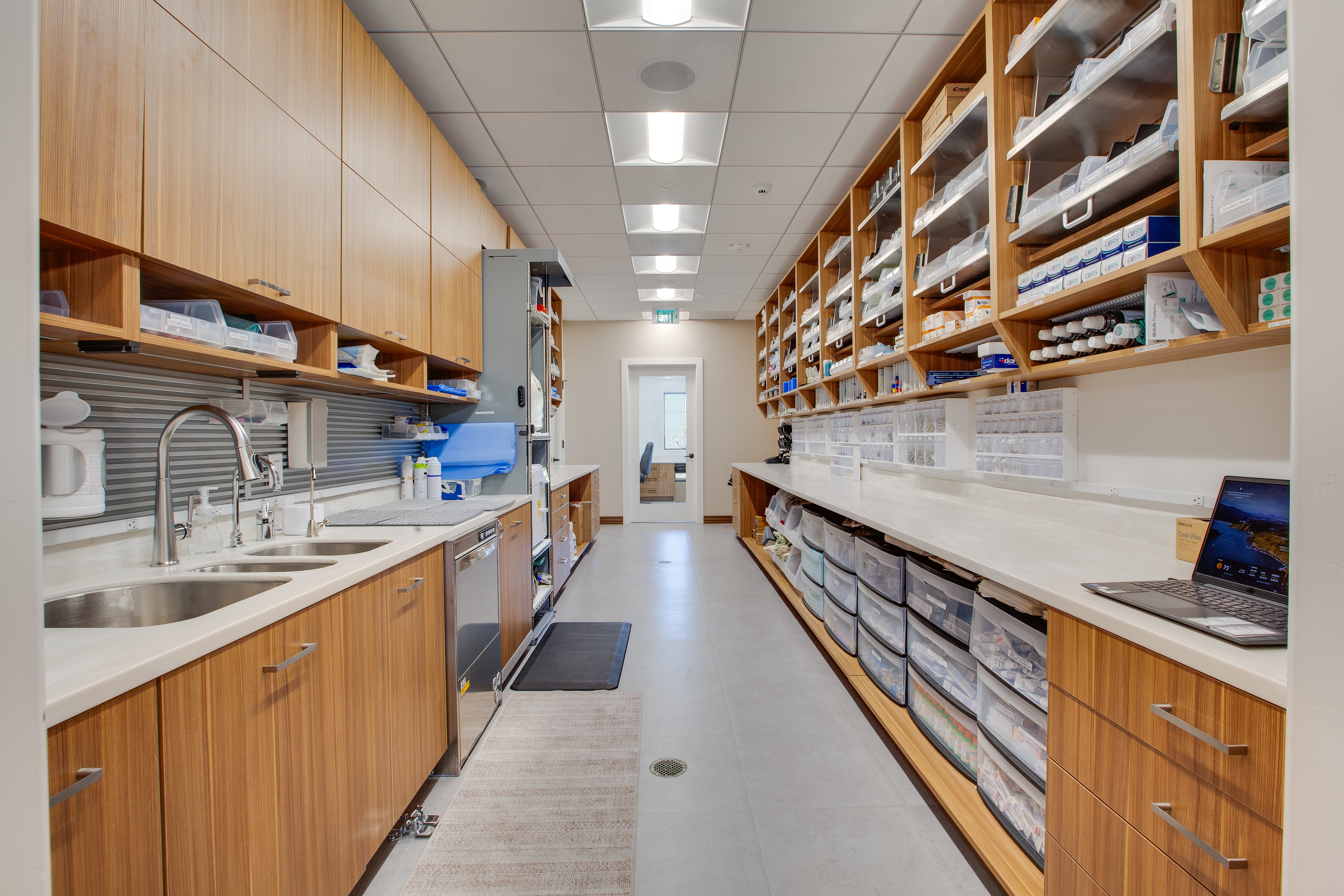
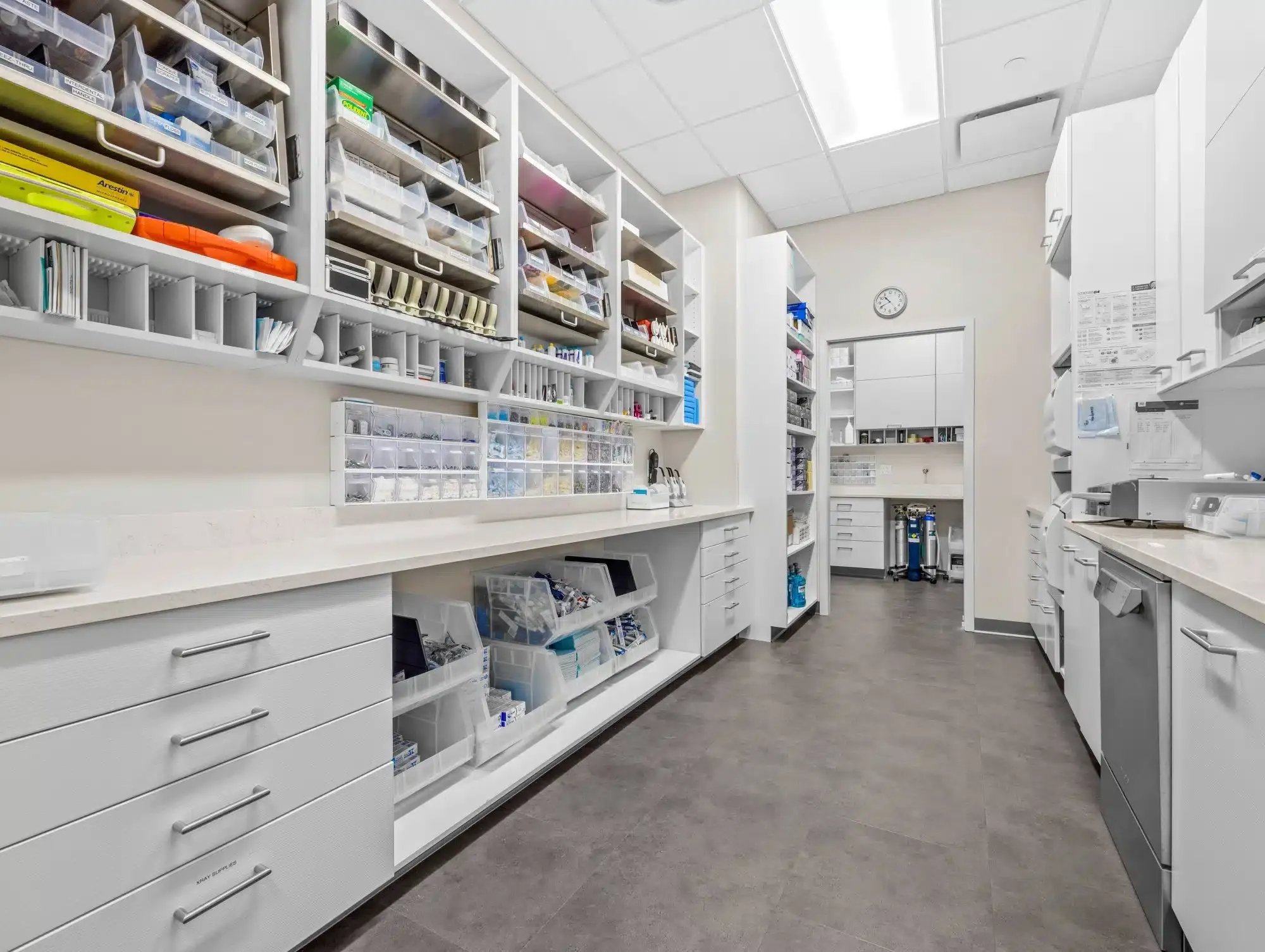
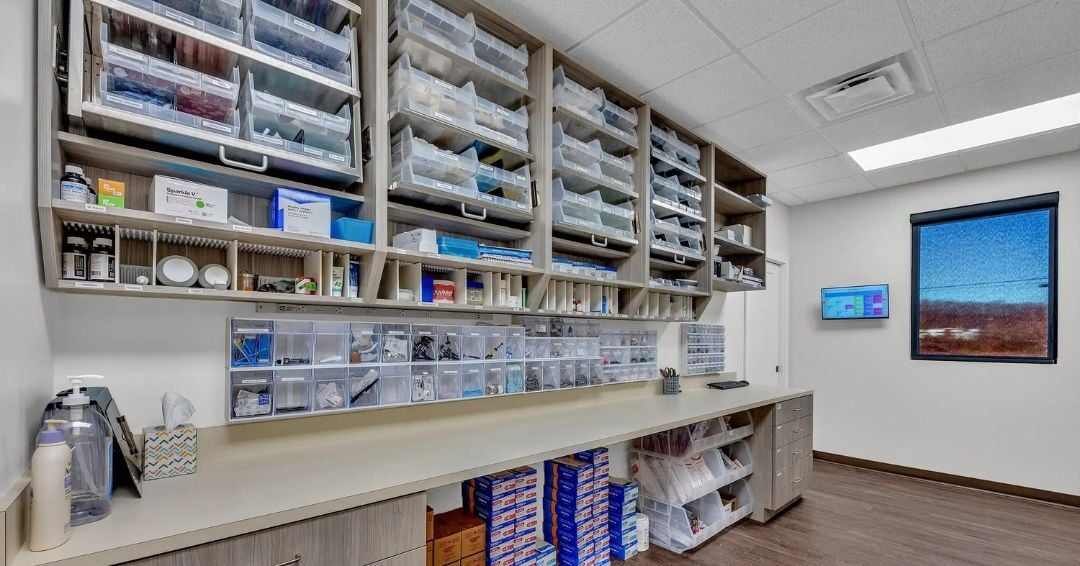
A case of six-gallon jugs takes up about 18” x 12” x 12”. Three cases? That’s over 4.5 cubic feet of prime clinical real estate.
At Design Ergonomics, we view space differently:
Every cubic foot in your practice must produce value.
Personally, I’d rather not hike down the hall for suction tips because distilled water has claimed the closet.
Is your supply closet generating production… or just storing water?
What Does Distilled Water Actually Cost Over 5 Years?
Let’s be conservative:
- $200/year in materials
- Add labor, space, and handling → closer to $400/year true cost
Over 5 years?
~$2,000
That’s the price of a commercial-grade onsite distillation system.
Which leads to the obvious question…
Is an On-Site Distiller Worth It for a Dental Practice?
Modern commercial distillers are very different from the countertop units that many practices tried years ago.
Today’s systems can:
- Install directly into your waterline
- Produce about 7 gallons of distilled water per day
- Eliminate manual hauling and storage
- Include 5–15 year warranties, depending on the manufacturer
Typical cost: under ~$2,000 installed
So the real question becomes: Would you rather spend $2,000 reacting, or invest $2,000 improving efficiency?
Let’s Talk Efficiency (My Favorite Topic)
Even with conservative estimates, the math becomes clear.
Managing distilled water manually can cost a typical practice around $400 per year when you factor in materials, time, storage, and logistics.
Over five years, that reaches about $2,000.
Which is roughly the cost of installing a commercial-grade distillation system.
And before you assume Amazon will save the day, convenience pricing for delivered distilled water can sometimes run up to ten times higher than buying locally.
When designing or remodeling a dental practice, decisions like sterilization layout, water systems, and supply management can significantly impact long-term efficiency.
These small infrastructure choices often determine how smoothly a practice operates for years to come.
Distilled Water & Dental Equipment: The Non-Negotiables
In North America, distilled water is the only water recommended for autoclaves. Some manufacturers also require distilled water in dental delivery units.
That said, any water, distilled or otherwise, used in dental unit waterlines is still at risk for biofilm growth without proper treatment. Always defer to your equipment manufacturer’s guidelines when selecting water for dental equipment.
Biofilm, Water Quality & The Rare Moment Everyone Agrees
Here’s the part where something unusual happens:
The CDC and the American Dental Association actually agree.
Dental Practice Water Quality Goal:
- <500 CFU/mL (CFU = colony-forming units)
This standard aligns with the Environmental Protection Agency's drinking water limits. While routine testing isn’t federally mandated, Heterotrophic Plate Count (HPC) testing is the accepted method to verify that dental water systems are being properly maintained.
Best practice?
Test your dental unit waterlines quarterly.
Whether you’re making moonshine or maintaining your autoclave, onsite distillation is the most efficient, cost-effective, and sustainable solution for distilled water in the dental practice.
Help control the biofilm population. Test your water regularly.
Your equipment, your pocketbook, and your team will thank you.
Distilled Water System Recommendations for Dental Practices
Dental practices have several options when it comes to producing distilled water on-site.
Systems range from fully integrated units, such as VistaPure, which connect directly to a practice’s water supply, to high-capacity standalone distillers like those manufactured by Duraline Systems.
For larger practices, integrated distillation systems may provide a more efficient solution. These systems connect directly to the building’s water supply and can produce distilled water continuously, eliminating the need for manual filling or monitoring. Companies such as Dental Purity manufacture dental-grade distillation systems designed specifically to support autoclaves and dental delivery systems in clinical environments.
There are also compact countertop distillers, which typically produce around one gallon of distilled water per cycle, making them suitable for lower-volume practices or as a supplemental source of distilled water.
In smaller dental practices, available counter space (particularly within the sterilization area) can be limited. For that reason, the choice of a distillation system often comes down to balancing space constraints, production needs, and budget.
Whether a practice selects an integrated system, a standalone high-capacity distiller, or a compact countertop unit, it’s important to recognize that all distillation systems require routine maintenance and periodic cleaning to maintain performance and water quality.
But the bigger takeaway isn’t just about water.
In dentistry, meaningful operational improvements often come from addressing small, repeated inefficiencies. Tasks like hauling, storing, and managing distilled water supplies may seem minor, but over time they affect workflow, team workload, and how effectively valuable clinical space is used.
Evaluating these everyday systems can lead to measurable gains in efficiency and consistency.
And regardless of how your practice manages distilled water, maintaining proper water quality is essential. Regular testing and effective biofilm control help protect your equipment, support patient safety, and keep your systems operating as intended.
At Design Ergonomics, we help dentists identify and eliminate these types of operational inefficiencies through smarter workspace design, optimized sterilization centers, and integrated equipment systems that reduce unnecessary tasks and improve daily workflow.
If you'd like to talk through ways to eliminate inefficiencies like these in your own practice, give our team a call.
You can also explore our Dental Office Blueprint Guide, which outlines practical strategies to make your practice significantly more efficient through smarter design and workflow planning.




%20(648%20x%20324%20px)-1.png?width=648&height=324&name=cost%20pyramid%20featured%20image%20(3.125%20x%201.823%20in)%20(648%20x%20324%20px)-1.png)